University
Transforming Research into a Cohesive Student Portal Experience
End-to-end UX for a Group of Eight university, consolidating two legacy student portals into a unified experience, grounded in a comprehensive discovery program across 40+ participants.
Client
A Group of Eight University, Australia
DURATION
6 months
team
1 Project Lead · 1 Senior Product Designer · 1 Product Designer (me)
Overview
A Group of Eight university was operating two separate student portals — a legacy student portal and a separate application management system — creating a fragmented and inconsistent experience for students navigating enrolment, applications, and support. The university engaged our team to research the current state, define a future-state information architecture, and design a unified portal bringing both systems together under one cohesive experience.
Embedded within the university's Salesforce agile team, I worked across research, synthesis, information architecture, wireframing, usability testing, and design documentation over a six-month engagement.
The Challenge
Students were navigating two disconnected systems with overlapping but inconsistent content, unclear navigation, and limited visibility of their enrolment and application status. Before any design decisions could be made, the team needed to understand a complex ecosystem of student types, staff workflows, and legacy technical constraints.
Three key challenges shaped the work:
Designing for multiple student cohorts including postgraduate, undergraduate, HDR, international, and mature age students, each with distinct needs and journeys
Merging two existing portals into a single unified experience without losing functionality critical to either system
Balancing near-term sprint delivery within a Salesforce agile environment with a longer-term future-state vision
The Approach
Research & Discovery
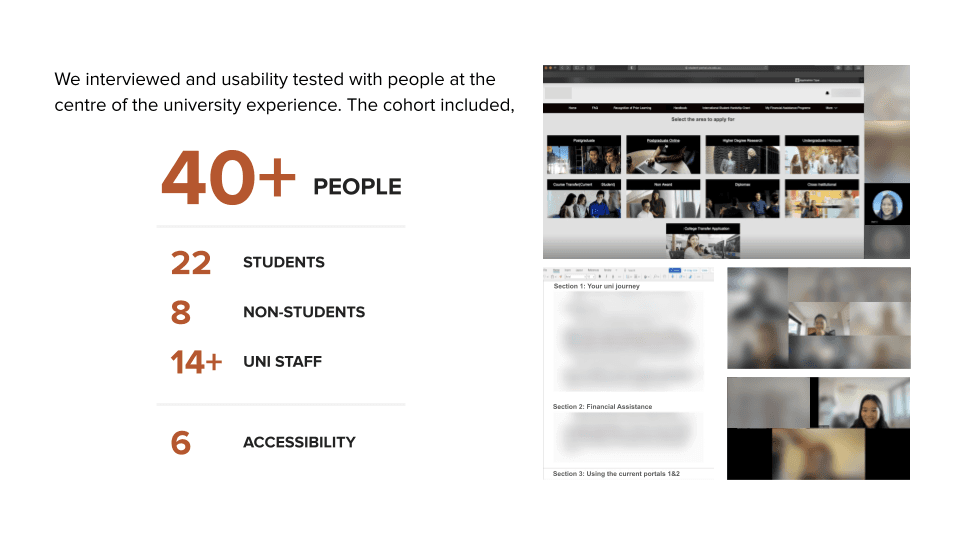
With a broad project scope and intensive research timeline, I led participant recruitment, building a workflow spanning outreach, screening, consent, scheduling, session management, and reimbursement. This enabled efficient selection from a large participant pool and ensured smooth delivery of over thirty research sessions under tight timelines.
As a team, we conducted discovery workshops and in-depth interviews with over 40 participants including students, prospective students, university staff, and participants with accessibility needs. One participant had combined sensory impairment, making conventional interviews impossible. I worked closely with them to co-create an alternative format using asynchronous written collaboration, ensuring their perspectives were meaningfully captured and surfacing accessibility insights that shaped the project's priorities.
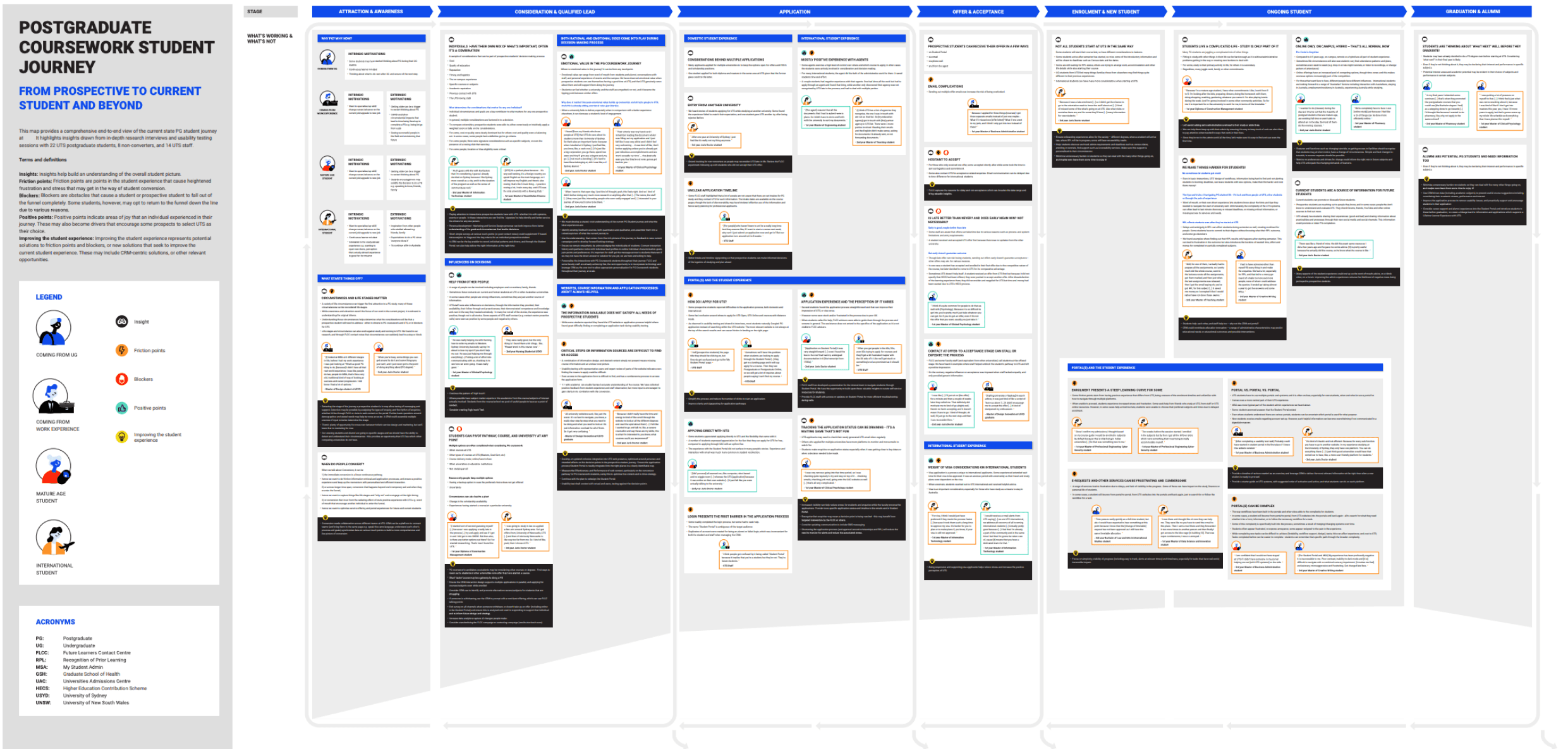
We synthesised the research into a comprehensive journey map spanning the full student lifecycle from prospect to alumni. Rather than a traditional report, we produced a visual end-to-end artefact surfacing behavioural insights, friction points, and opportunity areas that became a central decision-making tool throughout the project.
IA, Wireframing & Design
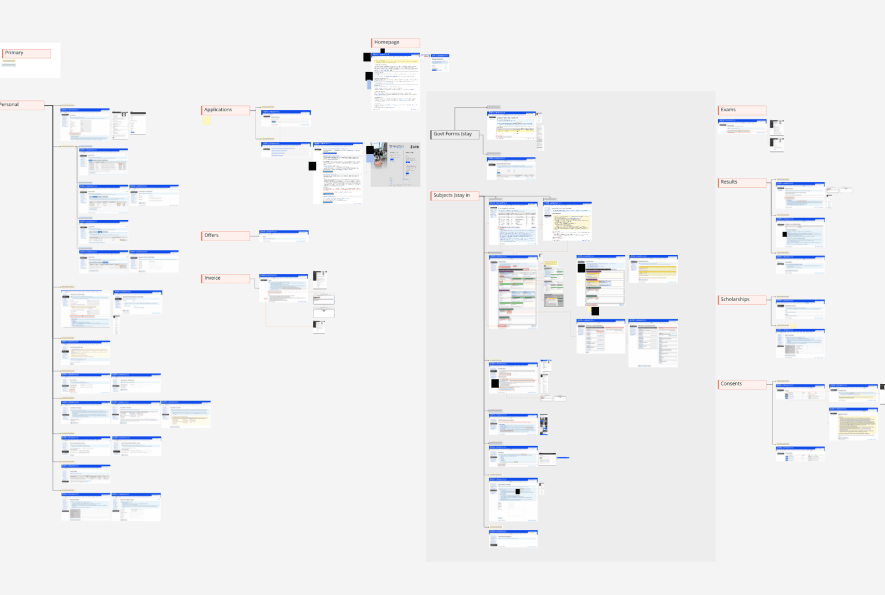
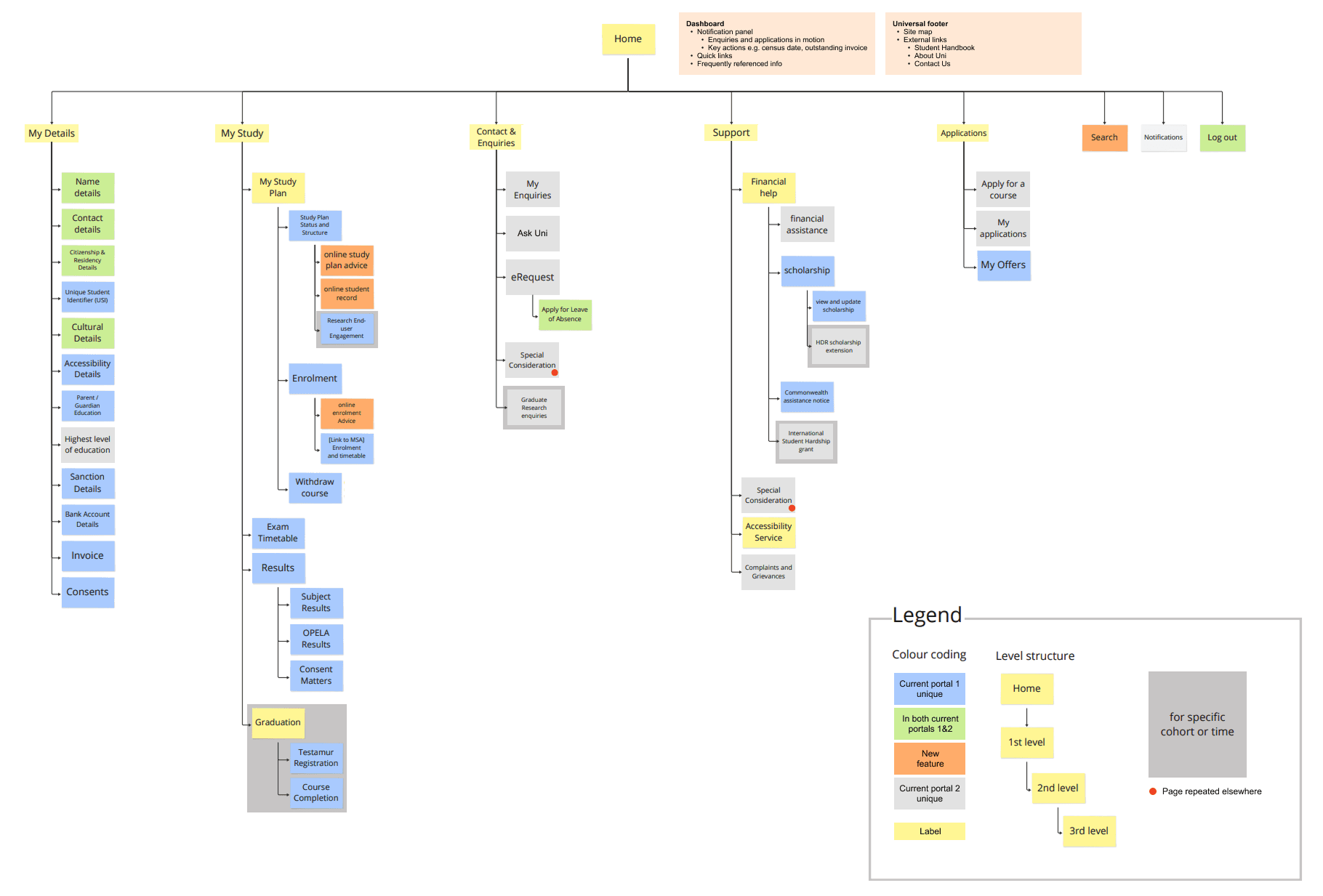
I conducted heuristic evaluations of both existing portals to surface usability failures, accessibility gaps, and structural inconsistencies, and developed comparative site maps to give the team a shared picture of what existed before design began. Working collaboratively, we designed a new unified information architecture grounded in the research synthesis and validated through card sorting exercises with students.
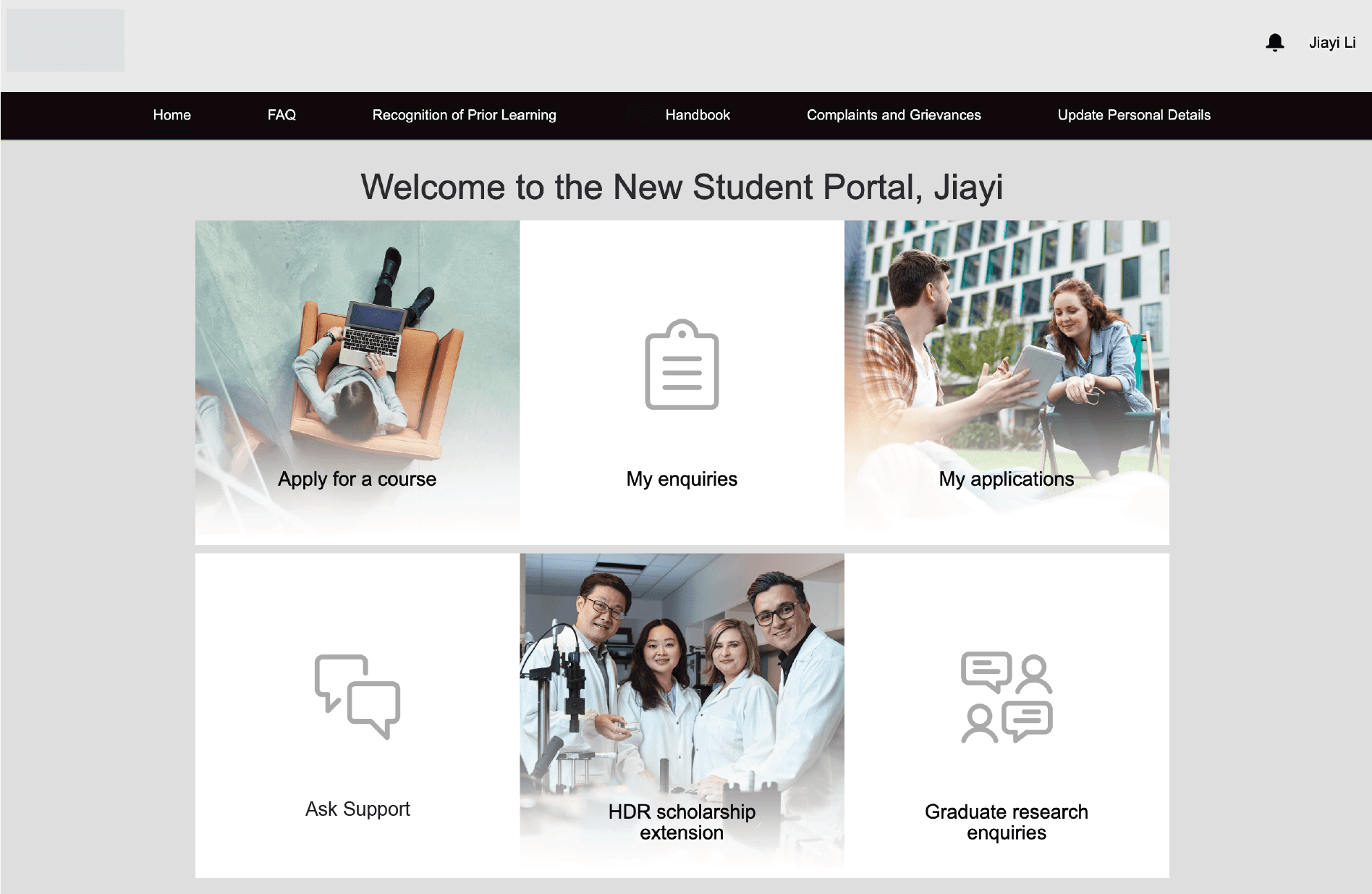
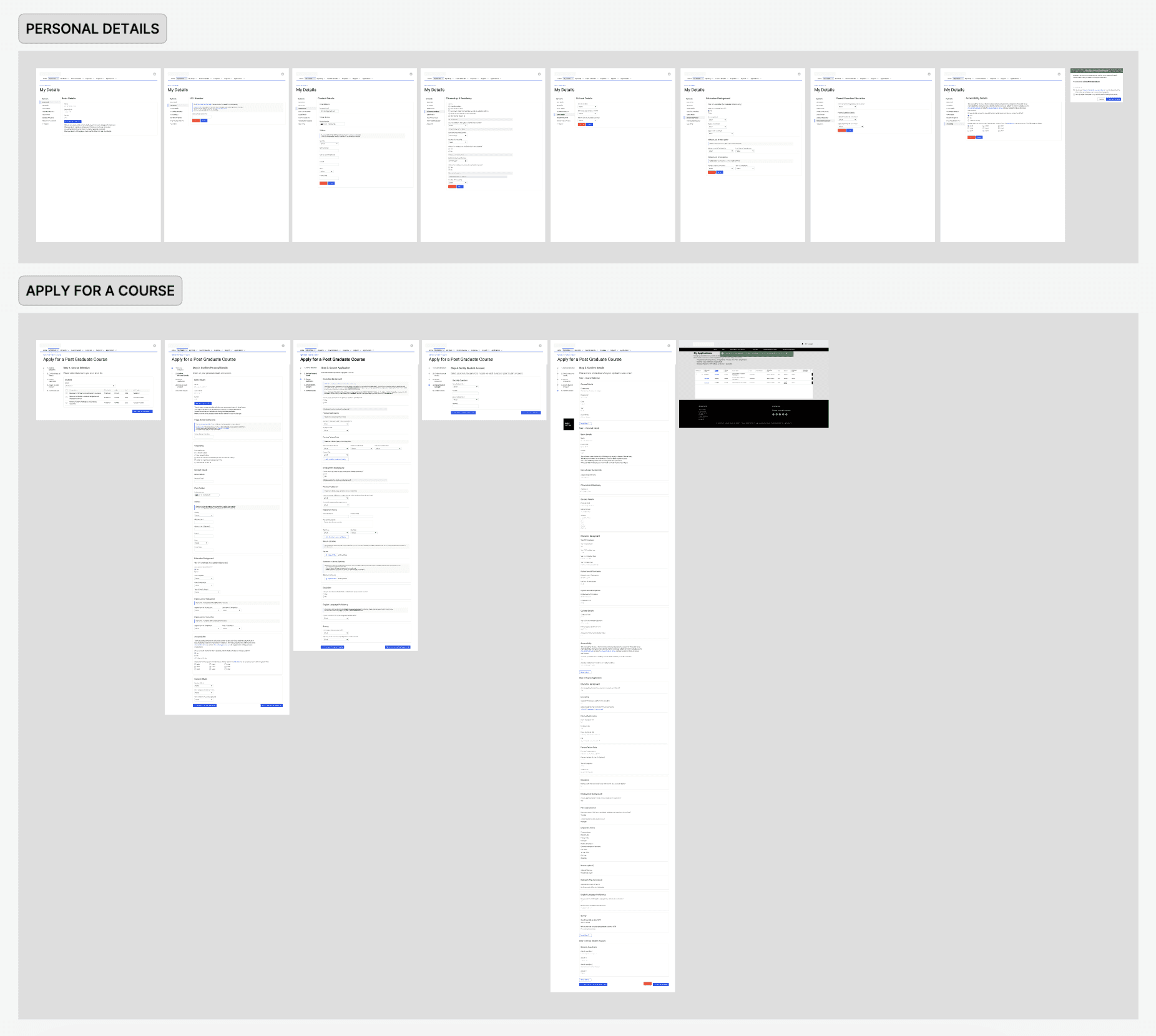
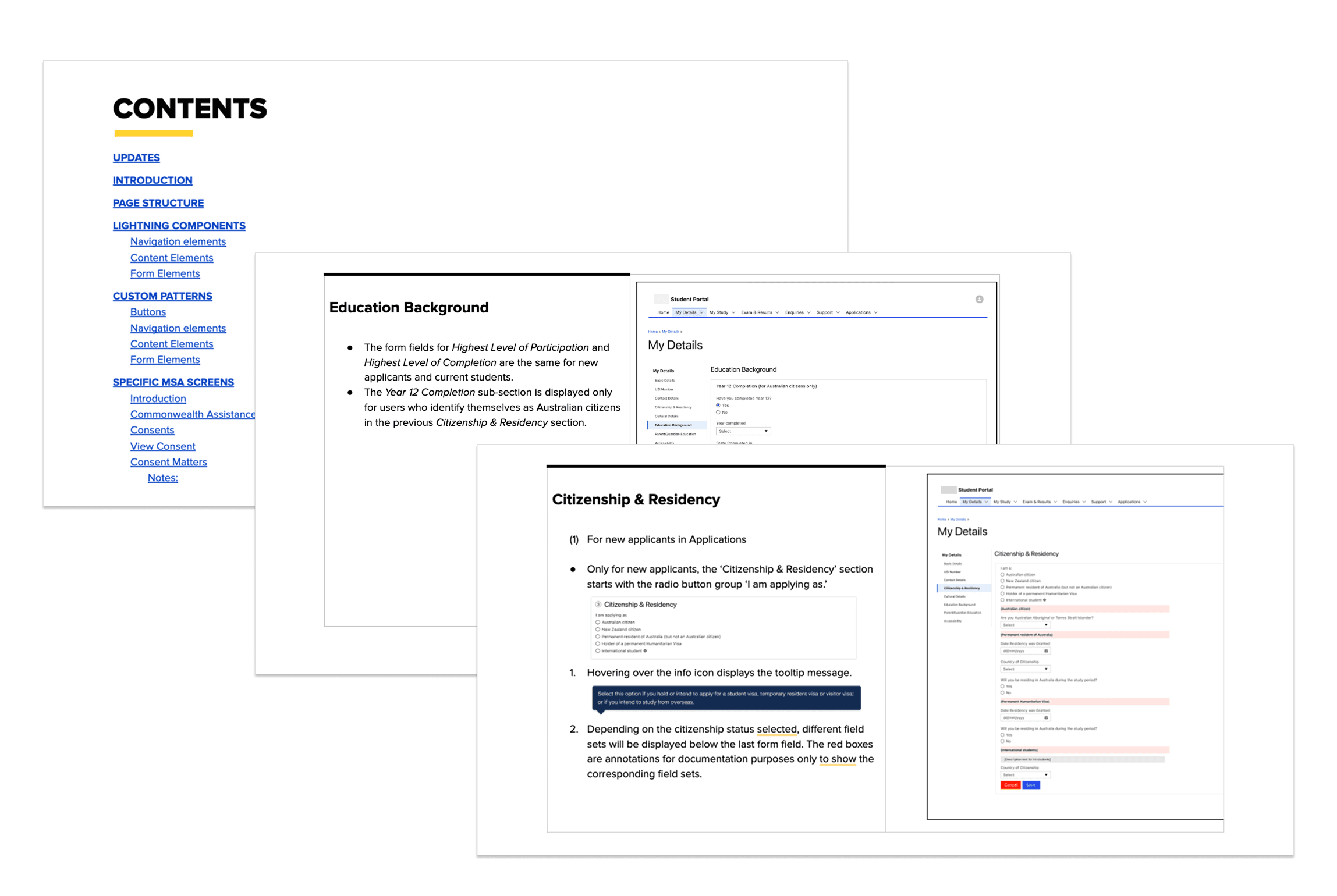
With the structure in place, I took ownership of the wireframe design for the personal details and application flows, two areas research had consistently flagged as most problematic. The focus was on reducing duplication, simplifying complex form logic, and clarifying the steps students needed to take. We continued refining these flows through ongoing usability testing. To close the project, I co-authored detailed design documentation for the Salesforce development team covering page structure, component usage, interaction behaviours, and screen-by-screen annotations.
Results
The unified portal design consolidated two fragmented student systems into a single coherent experience, validated through usability testing across multiple student cohorts. The research program produced a comprehensive journey map spanning the full student lifecycle, directly informing the university's product roadmap and CRM strategy going forward.
Key outcomes:
Journey map covering 7 stages and 4 student types, used as a central product and CRM strategy input
Unified portal IA that consolidated two legacy systems with clear content migration logic
Wireframes and interaction patterns for the highest-friction student flows, designed within Salesforce Lightning constraints
Sprint-ready design documentation enabling confident development handover
Usability testing across 40+ participants, validating design decisions before build